
FRIGHTFUL STORIES
SPOOKY SLIDESHOW
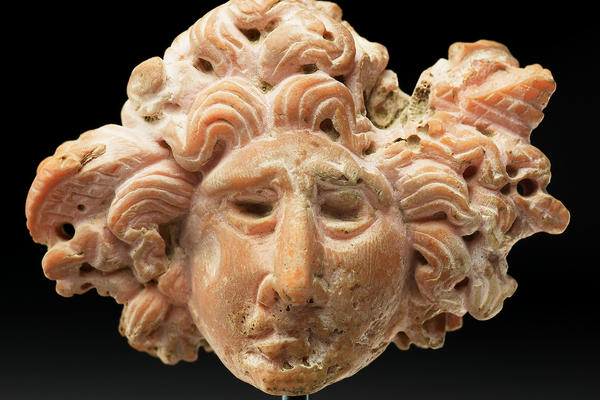
Head of Medusa, BCE 200 - 1 BCE
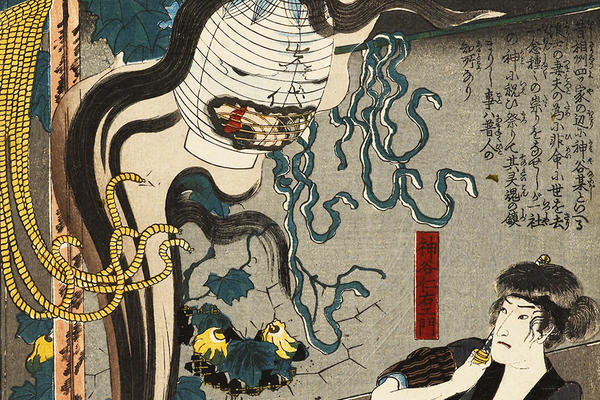
Ghost of Iowa by Utagawa Kunoyishi, 1845–1848
Grotesque coconut cup & cover, c. 1510–1600
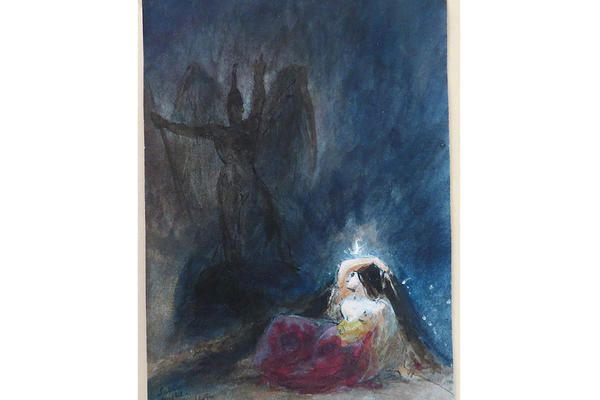
Satan NIght by George Jones, 1830–1860
Decomposing face pendant (rosary bead), 1510–1530
The Witches' Dance, 1720
Ancient Greek pottery depicting Odysseus and sorceress Circe, 4th century BCE
Ariel riding on a Bat by Joseph Severn, 1820
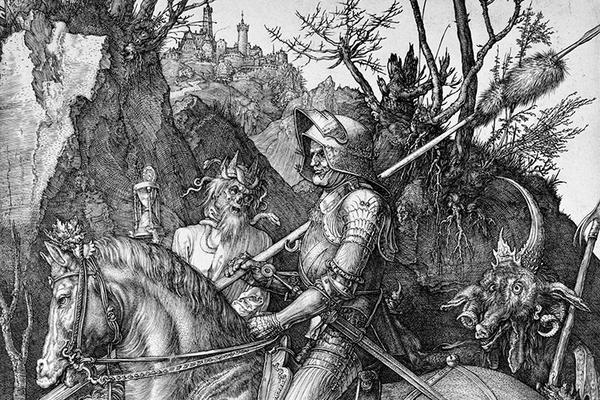
Knight, Death and the Devil, Albrecht Dürer, 1513
Lucky Bats Tobacco Container
PORTRAIT OF A YOUNG MAN WITH A SKULL
By Bernardino Licinio, c. 1510–1515
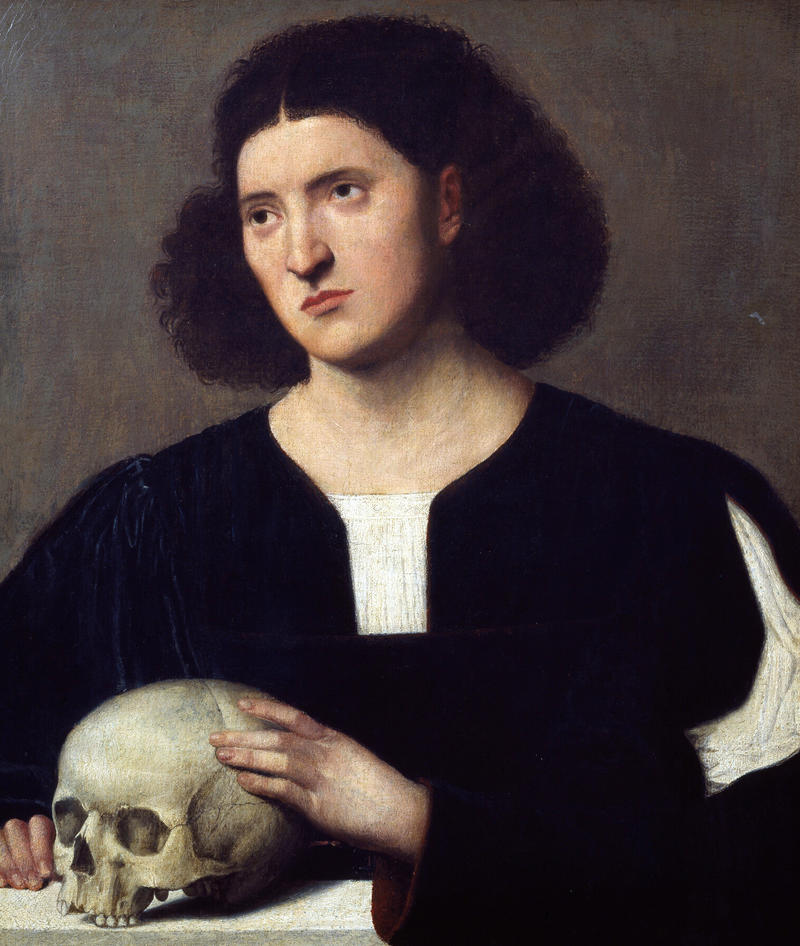
The Renaissance painter Bernardino Licinio was born in Venice to a Lombard family. He was impressed by the art of Giorgione, exploring the type of poetic portrait that he and artists in his circle had developed.
Youth and beauty are contrasted with death and decay in this expressive portrait of c.1510-5. The sitter was traditionally thought to be a woman, due to overpainting which was removed in 1956.
The painting is on display in the Ashmolean's Italian Renaissance Gallery 43 on Level 2.
WA1946.199
On display
MEMENTO MORI SKULL RING
Memento mori gold, enamel and diamonds skull ring, Europe, 1600–1700
Death from disease, famine or war was an ever-present reality in the 16th and 17th centuries. Memento mori rings (from the Latin ‘remember that you must die’) reminded the wearer of the brevity of life, and the need to prepare for death and the afterlife. The prospect of death served to emphasise the emptiness and fleetingness of earthly pleasures, luxuries and achievements.
This is the finest memento mori ring in the Ashmolean’s collection. Diamonds are set in the skull’s eye sockets and nose, and in the crossbones. These would have sparkled and flashed in the light, drawing attention to the ring’s macabre message.
The ring was presented to the Museum by C.D.E. Fortnum in honour of Queen Victoria's Diamond Jubilee in 1897. It's one of the remarkable collection of over 800 rings, also by C.D.E. Fortnum. The collection was given to the Museum with the aim to help us become ‘an institution of the first importance for teaching and illustrating the development of art applied to both small and larger objects’.
On display in the European Goldsmith's Gallery 53, Level 2
WA1897.CDEF.F476
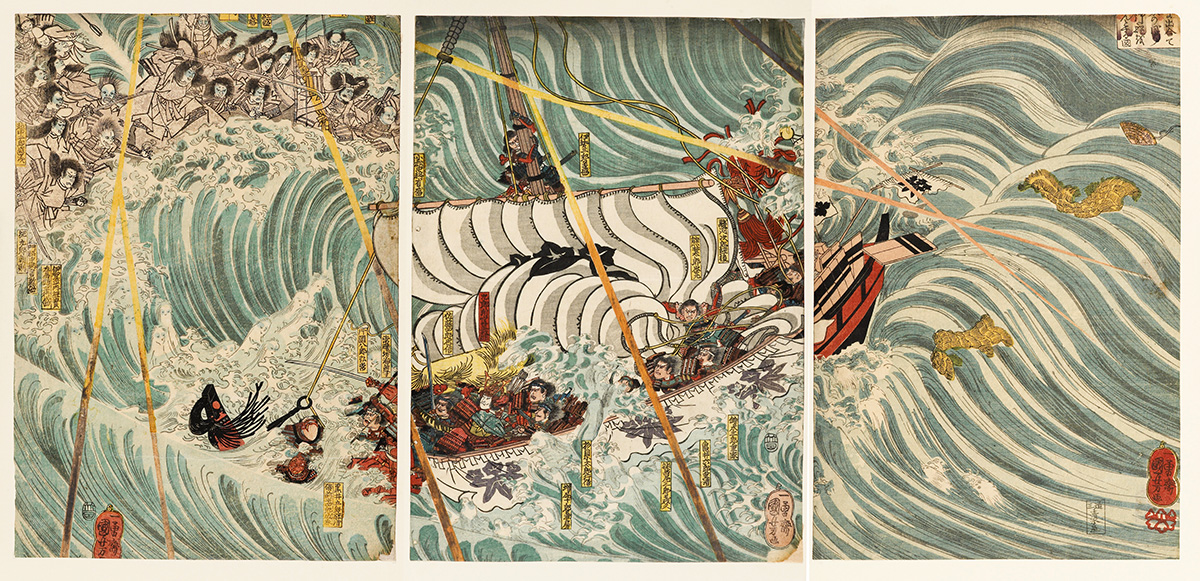
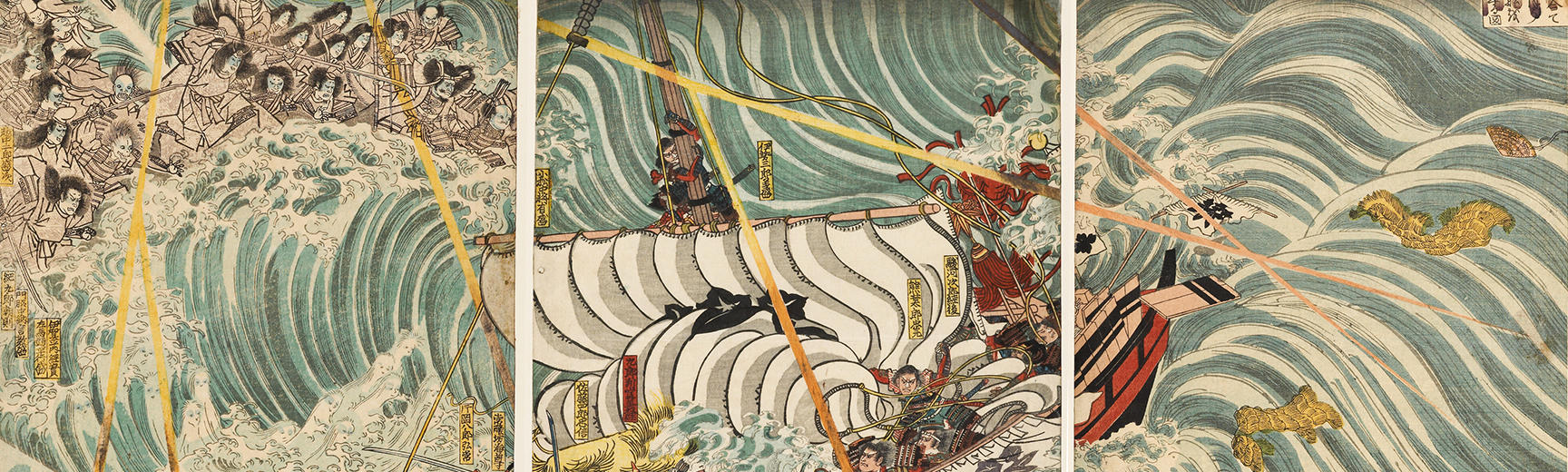
TAIRA GHOSTS ATTACKING YOSHITSUNE'S SHIP
By Utagawa Kuniyoshi, 1843–1845
During the 12th century, the Minamoto and Taira warrior clans waged decades of battles that were depicted in countless stories and pictures. In the final sea battle between the two clans at Dannoura in 1185, the brilliant commander Minamoto no Yoshitsune destroyed the Taira fleet and the leading members of the Taira family were slain or drowned. Soon afterwards Yoshitsune was caught in a terrible storm and the ghosts of the dead Taira warriors rose from the depths of the sea to sink the ship.
Kuniyoshi’s distinctive style brings it to vivid life in this triptych, colour woodblock print. Even the crests of the waves are ghostly.
EA1971.16
Not on display
COMPOSITION WITH BIRDS AND BATS
Composition with Birds and Two Bats by Jan van Hessel, the Elder
1650–1679
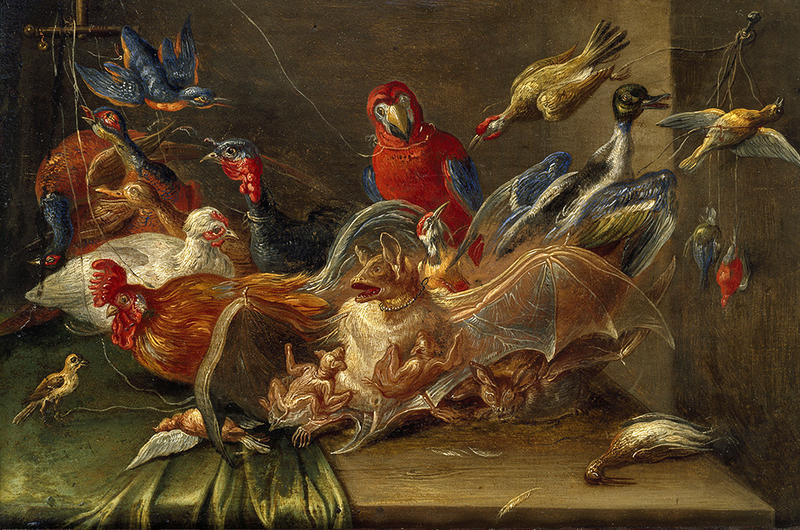
This dramatic composition depicts two flapping bats in the centre of the painting, with one of them fiercely protecting their pups. They are being mobbed by an assortment of diving birds, both domestic and exotic, with some deceased birds lying around.
The painting was made by Jan van Kessel the Elder, one of the finest Flemish still-life painters of the 17th century. He painted mainly small-scale pictures of flowers, fruit, vegetables and insects in oils on copper. This particular work is therefore more unusual in its subject matter. It’s from a set of four similar small paintings by the artist on show in the Museum.
On display in the Daisy Linda Ward Still-Life Paintings Gallery 48 on level 2
WA1940.2.47
GHOST SCROLL
A female ghost looking out from behind a bamboo blind, by Mano Kyōtei
19th–20th century
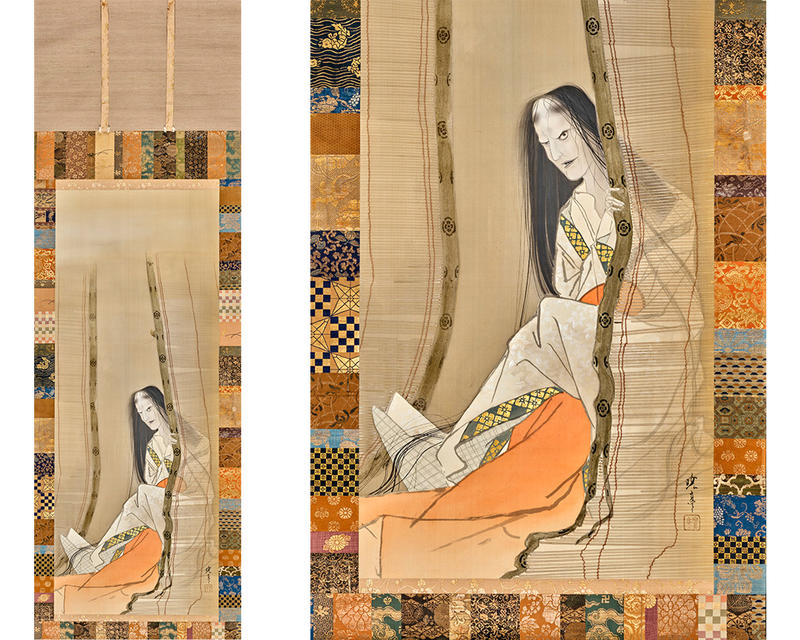
Left: Full-length hanging scroll. Right: Detail showing the ghost
With her white robe, pale skin, black lips and dishevelled black hair, this is a typical Japanese ghost, or yūrei. Her disfigured face suggests that she might be Oiwa, a young woman who was poisoned by her husband and returned as a ghost to wreak her revenge. Mano Kyōtei was a prominent artist in the Nihonga (Japanese painting) style, known for his eerie depictions of supernatural beings.
The bamboo blind is new to the Museum's Japanese collection and is made of silk.
EA2024.151
Not on display
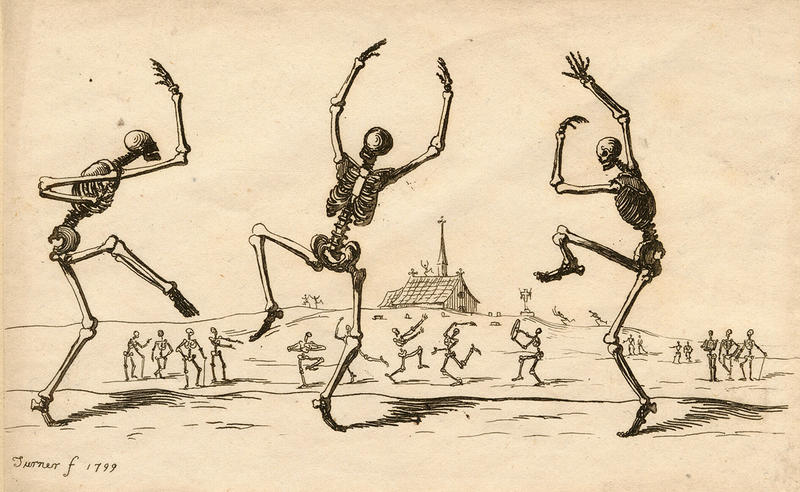
SKELETONS DANCING
By Sir Tomkyns Hilgrove Turner, 1799
This energetic etching comes from the collector and antiquary Francis Douce’s collection of prints relating to the Dance of Death. The name used to refer to an iconographic motif that arose in Medieval Europe in which Death, personified as a skeleton and with musical instruments abound, leads men and women in a dance to their graves. As a memento mori, the motif of the Dance reminded viewers of their inevitable mortality.
While the entirety of Douce’s print collection (transferred to The Ashmolean in 1863 and again in 2003) contains works that reveal Douce’s persistent interest in the quirks of humanity’s beliefs and morals, the Dance was a particular catalyst for his curiosity.
WA2003.Douce.15327
View by appointment in the Western Art Print
SCARY PLAQUE
Plaque depicting ghosts from the story of The Tongue-Cut Sparrow, 1801–1900
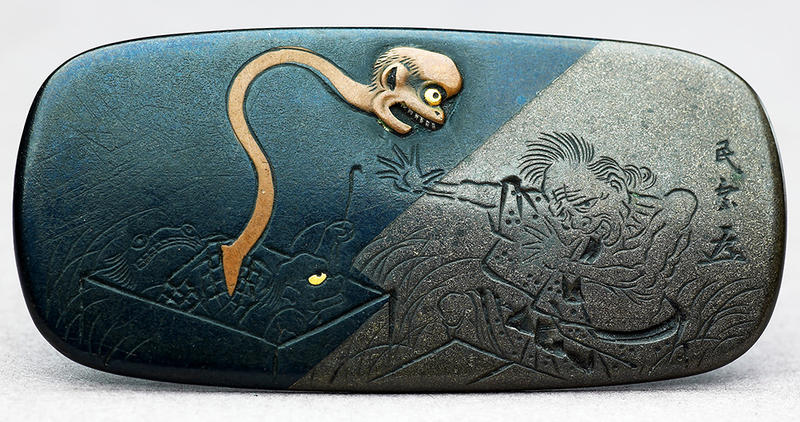
A ghoulishly decorated metal plaque inlaid with copper, gold and the alloy shakudō.
The engraved scene brings to life the Japanese fairy story in which a mean old woman cuts the tongue of a tiny sparrow who has eaten her rice starch. Her kind husband rescues the sparrow and receives a treasure box as a reward. His greedy wife demands a box too, but when she opens it, it is full of ghosts and monsters!
EA1956.2815
Not on display
JAPANESE KIMONO SASH BEADS
Netsuke depicting a horse caught in a spider's web
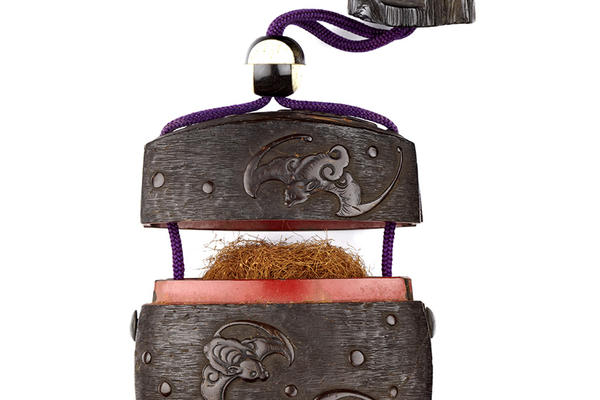
Ojime in the form of a bat, 18th & 19th century
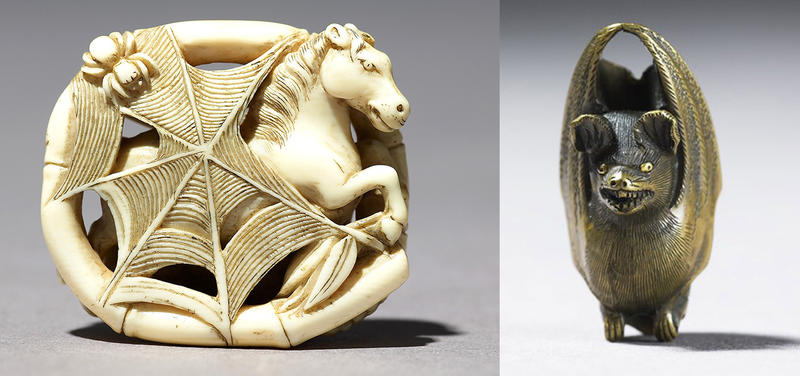
Until the 19th century all Japanese citizens wore a kimono, fastened by an obi sash. Small personal items such as purses, pipes or medicine containers were hung from the sash by silk cords. The cord was threaded through a bead, or ojime, then tucked behind the kimono sash and secured with a small ornamental toggle or counterweight called a netsuke.
Above, you'll see examples of one of each, the horse caught in a spider's web netsuke is made of bone, while the ojime in the form of a bat is bronze. Both are tiny.
They're on display in Soma Surovi Jannat's free Gallery 8 exhibition on the Lower Ground Floor until 1 November, see if you can spot them before it closes.
Horse in spider's web netsuke
EA1956.1710
Bat ojime
EA1956.3749
PUMPKIN VINE
Pumpkin vine hanging scroll by Zhao Yunhuo, 1943
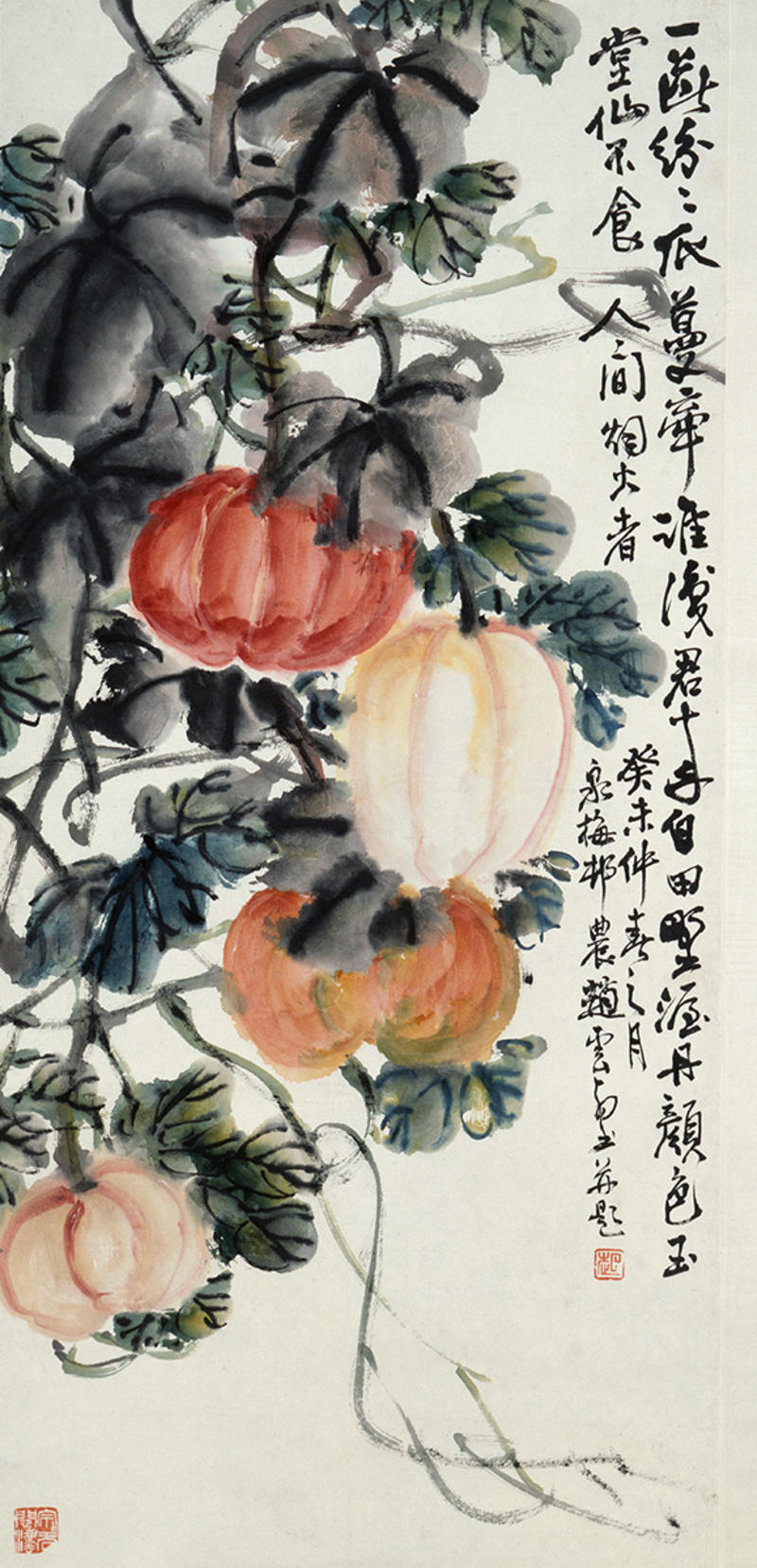
This Chinese hanging scroll features a lively brush painting of a pumpkin vine, in ink and colour. It’s by the artist Zhao Yunhuo, who was from Wuxian (present-day Suzhou) in Jiangsu province. Zhao specialised in flower painting and was a very highly regarded pupil of the renowned master of Chinese art, Wu Changshuo.
Pumpkins represent fertility and good fortune, and in parts of southern China it is traditional to give newlyweds a 'stolen’ pumpkin at the Mid-Autumn Festival to encourage the future growth of their family.
Not on display
EA1966.164
View this by appointment
CERAMIC PUMPKIN
Mother Pumpkin II by Kate Malone, 2004
At 20cm high, this impressive sculpture made by ceramic artist Kate Malone was fashioned in stoneware and moulded as a pumpkin with a twisted stem. The underside has two air holes, is fired unglazed in a salt kiln and has caught salt vapours on its surface.
Describing her love of pumpkins, Kate says, 'it has a beautiful shape and it looks corporal like a bosom, a belly or something plump and juicy.' She has made many ceramic pumpkins, large and small, mostly glazed, making this a unique example.
Pumpkins are seen as good omens to ward off the evil spirits of Halloween, because they symbolise abundance at harvest time. The history of pumpkin carving, associated with a ghoulish figure called 'Jack O'Lantern' - although popularised in America - goes back to the Celtic tradition. People used to place root vegetables, decorated with scary faces, on their doorsteps to frighten the devilish Jack away.
On display in the Sickert and his Contemporaries Gallery 63, level 3, but note this gallery is currently closed
WATCH OUR 'SCARY OBJECTS IN THE MUSEUM' VIDEO
https://www.youtube.com/embed/EgDk8ilDwHM?rel=0&cc_load_policy=1